Archives for June 2015

Having a blast at summer camp

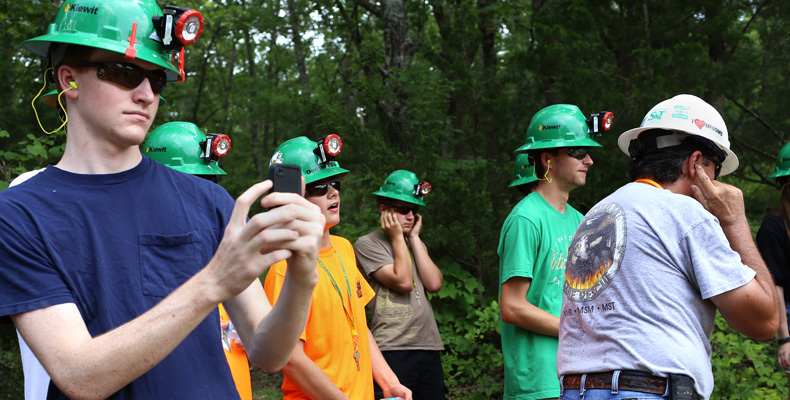
Students participate in a demolition during Explosives Camp at S&T's Experimental Mine.

Students participate in a demolition during Explosives Camp at S&T’s Experimental Mine. Photo by Aimee Whitmire/Missouri S&T

Who needs the campfires and bugs that traditional summer camps offer when you can learn how to detonate dynamite instead? [Read more…]
Miner munchies

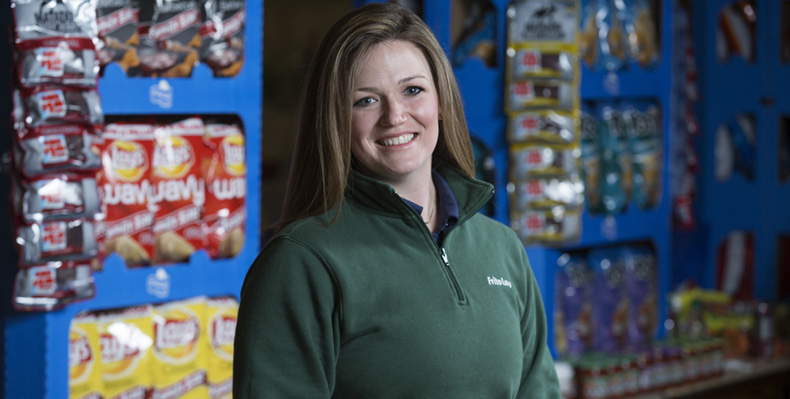
Alumna Catherine Swift, pictured in front of the Frito-Lay display at the Spring Career Fair, is just one of a handful of Miners who work in the company’s Topeka, Kansas, plant.

Alumna Catherine Swift, pictured in front of the Frito-Lay display at the S&T Spring Career Fair, is one of a handful of Miners who work in the company’s Topeka, Kansas, plant. Photo by Sam O’Keefe

Frito-Lay’s Topeka, Kansas, plant operates 24 hours a day, so while most of us are sleeping, Catherine Swift is monitoring 10 production lines and 59 automated packaging tubes that take raw ingredients and turn them into bagged snack foods, ready for supermarket shelves.

“As a core plant, we produce major products like Doritos, Lays, Sunchips, Tostitos and Fritos,” says Swift, who earned a bachelor of science degree in mechanical engineering at Missouri S&T in 2010. Each year the Topeka plant produces over 175 million pounds of snacks.

Swift, who has been with Frito-Lay for almost five years, started out as an undergraduate intern. Now she is a manager on the plant’s third shift.

Swift helps closely monitor the plant’s production process for moisture and oil levels, and each shift compares its batches to a reference product for appearance, flavor and texture. Swift ensures that the snacks that leave the Topeka plant are the same quality as the ones made in other locations.

“We ship directly to stores, so our warehouse operation is very similar to large delivery companies,” Swift explains. “For our process, shuttle robots run through our aisles finding products and getting them ready for shipping to stores throughout the country.”

When Swift isn’t working, she coaches a local high school girls’ soccer team, making use of skills she honed as a Lady Miner goalkeeper for four years at Missouri S&T. She also frequently makes trips back to Rolla.

“Since graduating, I haven’t missed a career fair yet,” says Swift. “I return every spring and fall to recruit other Miners.”

No matter where she goes, Swift says she is always asked about her favorite snack. “I used to like the nacho cheese Doritos best, but something about working third shift has me really starting to like Funyuns.”

Several other Missouri S&T alumni work in the Topeka plant with Swift, including:

  • Chris Emesih, who earned a bachelor of science degree in engineering management in 2014
  • Kori Louvall, who earned a bachelor of science degree in engineering management in 2013
  • Everett Moore, who earned a bachelor of science degree in mechanical engineering in 1986
  • Ryan Schmidt, who earned a bachelor of science degree in engineering management in 2013
  • Aimee Snell, who earned a bachelor of science degree in mechanical engineering in 2013
  • Brooke Ryan, who earned a bachelor of science degree in architectural engineering in 2011
  • Amiel Weerasinghe, who earned a bachelor of science degree in civil engineering in 2010 and an MBA in 2012.

By Peter Ehrhard

Adapted from the Spring 2015 issue of Missouri S&T Magazine

Close-knit S&T lures, launches Lampe to success

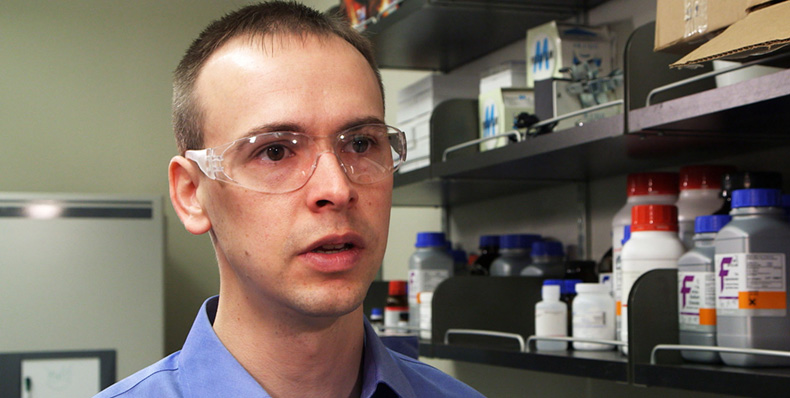
Missouri S&T graduate Kyle Lampe, now an assistant professor at the University of Virginia, is conducting research that may one day lead to treatments for multiple sclerosis and other diseases.

Missouri S&T graduate Kyle Lampe, now an assistant professor at the University of Virginia, is conducting research that may one day lead to treatments for multiple sclerosis and other diseases. Photo contributed by the University of Virginia

Twenty-one thousand, three-hundred ninety-five. That’s the difference between Kyle Lampe, the English literature scholar and Kyle Lampe, the chemical engineer. That number is the difference in enrollment between Iowa State University (26,110) and Missouri S&T (4,715) when Lampe started college in 1999.

Bigger was not better for Lampe, who earned a bachelor of science degree in chemical engineering at Missouri S&T in 2004, and now is an assistant professor of chemical engineering at the University of Virginia.

“I didn’t want to go to Iowa State because it was just too big,” says Lampe, who grew up in Clarinda, Iowa – a town of 5,806. “I felt like I would get lost there.

“When I went to Rolla, it was the right size school. I didn’t know anybody, but I got to know a lot of people, and the professors knew your name. When I got to Rolla … everybody was on equal footing. Nerdy was cool.”

These days, Lampe leads his own “nerdy” engineering students in cutting-edge research that may one day lead to cures or treatments for diseases such as multiple sclerosis, Alzheimer’s disease, Parkinson’s disease and people who have suffered a stroke or a spinal cord injury. The work is done through the Lampe Biomaterials Group, which launched at U.Va. in 2014.

There, Lampe is using synthetic polymer materials to encapsulate oligodendrocytes in a 3-D hydrogel that simulates properties of the brain. Oligodendrocytes are cells with many branches that support and insulate axons in the central nervous system by wrapping the axons in a myelin sheath. In people with MS, Lampe says, the oligodendrocytes go haywire. Finding a way to target or replace the malfunctioning oligodendrocytes could lead to a treatment.

For people who have suffered a stroke — the second-leading cause of death worldwide — treatments such as transplanting neural stem cells are ineffective, Lampe says, because 95 percent of those cells die within a week. Using a new biodegradable polymer hydrogel might be more effective because as they erode, they scavenge free radicals, thus acting like an antioxidant in the brain. Being able to place the slowly released antioxidants in a specific site of injury could help limit a stroke’s damage, Lampe says.

It’s the kind of work Lampe was — well, maybe not born to do, but it’s his life’s work now.

“I knew I was interested in engineering and science, the STEM disciplines,” says Lampe, who saw one of his older brothers, Paul, graduate from S&T in 1990 with an electrical engineering degree.

Kyle credits his advisor, Oliver Sitton, associate professor of chemical and biochemical engineering, with igniting his spark for research. With Dave Westenberg, associate professor of biological sciences, he dove into research.

“When you meet him, you know he’s going to be successful,” says Westenberg while leafing through Lampe’s old research notebook. “He picks up what he learned, and he works hard to put his own stamp on it.”

From Rolla, Lampe went to the University of Colorado Boulder for his Ph.D. in chemical engineering. After five years at Colorado, Lampe worked as a post-doctoral fellow at Stanford University for three years to prepare for a research-intensive faculty position.

He has no problem with motivation.

“The thing I’m most excited about … the thing that gets me up is working with students,” Lampe says. “The fun part is, it’s different every day. There’s always something new and exciting.”

At S&T, he kept busy, not just with coursework. He was a resident assistant for two years at Thomas Jefferson Residence Hall, and then was the head RA at the Quad. He also acted in nine plays and musicals, including My Three Angels, The Foreigner, My Fair Lady, Guys and Dolls, and Camelot.

And he met his wife of eight years, Lisa Hartman Lampe, who earned her bachelor of science degree in applied mathematics from S&T in 2004. Lampe also works at Virginia as the director of undergraduate success in the School of Engineering and Applied Science.

For Kyle, everything that has followed started at S&T.

“Obviously, I got my initial training in how to approach research not from a lecture course, but with an approach toward getting the students to ask the questions,” Lampe said. “Moreover, I found this trait in many of the leaders at (S&T); students were really imbued with the authority to do things. We got the direction and support we needed and often failed. But that was part of it. As an RA, we had a lot of training, but the learning was a process, never complete.

“Honestly, though, I would say the most lasting impact of my time in Rolla was that I met and wooed my wife, who is my partner in intellectual, social and personal challenges every day.”

By Joe McCune


One last dip in the deep end

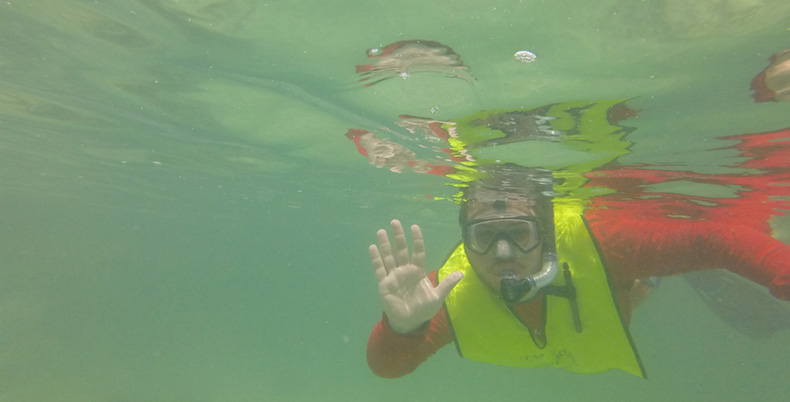
Justin Levy, who recently graduated with his bachelor’s degree in geology, waves to the camera while snorkeling off the coast of San Salvador Island in the Bahamas while on a nine-day field study trip.

Justin Levy, who recently graduated with his bachelor’s degree in geology, waves to the camera while snorkeling off the coast of San Salvador Island in the Bahamas while on a nine-day field study trip.

Justin Levy completed his collegiate career at Missouri S&T doing what he enjoys most – traveling.

Levy was one of eight geology and geophysics students to join Dr. David Wronkiewicz, associate professor of geology and geophysics, on a nine-day field study trip to San Salvador Island in the Bahamas in May. The group left just days after Levy crossed the stage at commencement with his bachelor’s degree in geology.

Although the students did group research on the geological formations and processes occurring on the island and their interdependency on biologic processes, each student also had the opportunity to do individual research.

The group spends some time studying the Cockburn Town fossilized reef.

The group spends some time studying the Cockburn Town fossilized reef.

With a passion for paleontology, Levy focused his research on the types of fossils found on the island. He studied a section of the island called the Cockburn Town fossil reef, which is made up of fossilized coral and shell fragments. He also tried to find fossilized decapods such as crabs, shrimps and lobsters.

“I wanted to compare the evolution of them (the decapods), and see if any evolution had taken place in the last million years,” says Levy. “If it had, it could signify a drastic increase or decrease in the food supply. Say, if one species had gotten much bigger, it could mean there was an increased food supply to allow them to grow to that size.”

Unfortunately, Levy didn’t find any decapod fossils, but he still learned a great deal about the nature of field studies.

“I found out that field research never goes the way you want it to go,” he says. “I thought I had an idea of what I was going to do. I thought it would be fairly easy; that everything would go my way. But I learned that you plan, plan, plan, and when you get to the field, you modify, modify, modify.”

Dr. David Wronkiewicz, associate professor of geosciences and geological and petroleum engineering, holds some organic material pulled from the hypersaline water of Storr’s Lake while researching the shallow lake on San Salvador Island.

Dr. David Wronkiewicz, associate professor of geology and geophysics, holds some organic material pulled from the hypersaline water of Storr’s Lake while researching the shallow lake on San Salvador Island.

In addition to studying the fossilized reefs of Cockburn Town, the students studied modern reefs, hypersaline lakes and cave systems. Much of their research was conducted in the water, either snorkeling on offshore coral reefs or wading in the shallow water of inland Storr’s Lake. They even did several snorkeling dives at night, encountering sea turtles and a shark.

“James Hutton, the father of modern geology, said that the present is the key to the past,” says Wronkiewicz. “The diversity of geology on the island allowed the students to see Hutton’s concept of past and present geologic processes adjacent to one another in only a few hours of time.”

Levy and other students on the trip wrote about their experiences on S&T’s Miners Abroad Blog. Levy wrote about the striking lack of fresh water on the island. A Club Med resort was built on the island in 1994, he wrote, which increased the island’s freshwater pump rate by some 400 percent. By the early 2000s, the island’s fresh water had dried up. Nowadays, locals use rain collection systems to collect freshwater, then purify it.

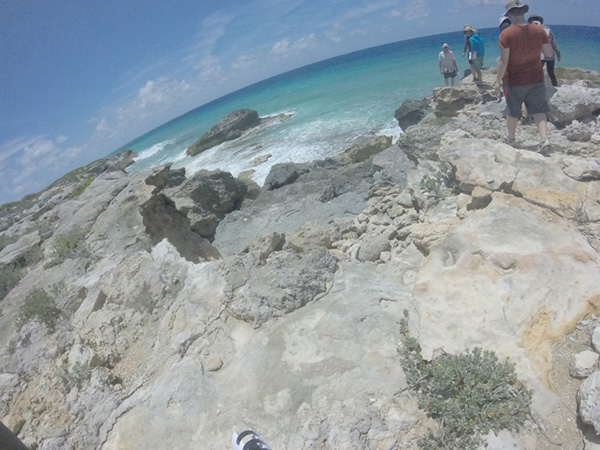
The group poses for a picture on San Salvador Island.

The group poses for a picture on San Salvador Island.

The group explored a “blue hole” that used to pump fresh water from beneath the island, but now it pumps salt water. Blue holes are inland caves or underwater sinkholes sometimes called vertical caves. These types of studies using blue holes as well as sea-level proxies can tell researchers about the past environment and help to predict the future, according to Levy.

Levy says he’s thankful for his time at S&T, and the many opportunities he had to travel as a geology student, which included three weeks of field camp in Kansas, Oklahoma, Texas and New Mexico; three weeks of advanced field camp in Utah and Arizona; a summer trip to Bolivia with Engineers Without Borders; and a semester as an exchange student in Hong Kong.

“This school has allowed me to find my passion, and that is travel,” he says.

Story by Greg Katski

Photos by Justin Levy

Straight outta Bombay

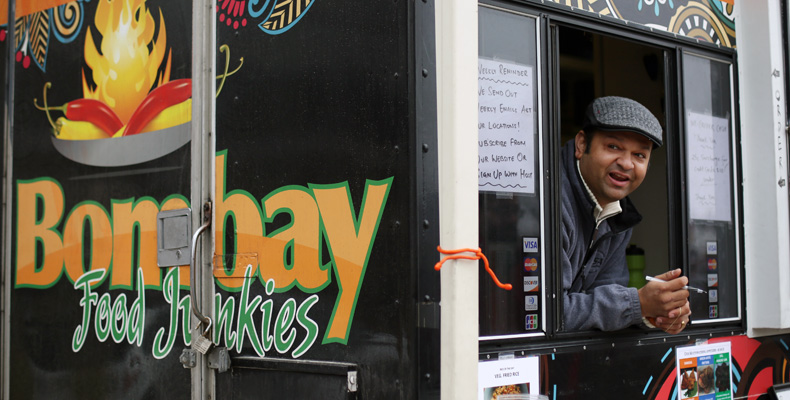
Sid Panchal works the window and serves authentic Indian street food out of his St. Louis-area food truck, Bombay Food Junkies.

Sid Panchal works the window and serves authentic Indian street food out of his St. Louis-area food truck, Bombay Food Junkies.

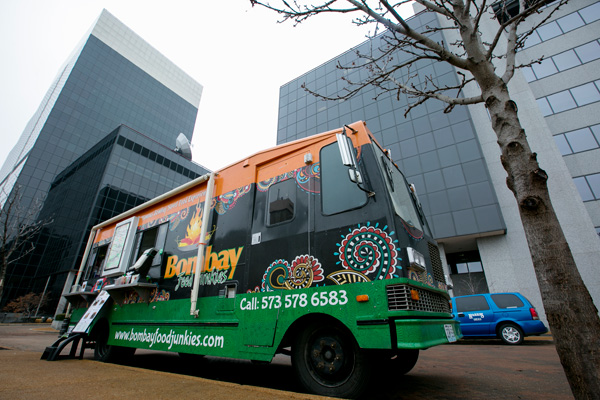
Inspired by a reality television show and missing the foods from his homeland, Siddharth “Sid” Panchal, who earned a master’s degree in computer science from Missouri S&T in 2003, opened Bombay Food Junkies in 2013. The Mumbai, India, native and his wife, Krupa, serve vegan and vegetarian meals from their food truck at St. Louis-area hospitals, industrial parks and college campuses, dishing out authentic Indian street food.

The business idea started when the couple watched “The Great Food Truck Race” on the Food Network. That was enough to spark the idea of delivering authentic street food to the people of St. Louis.

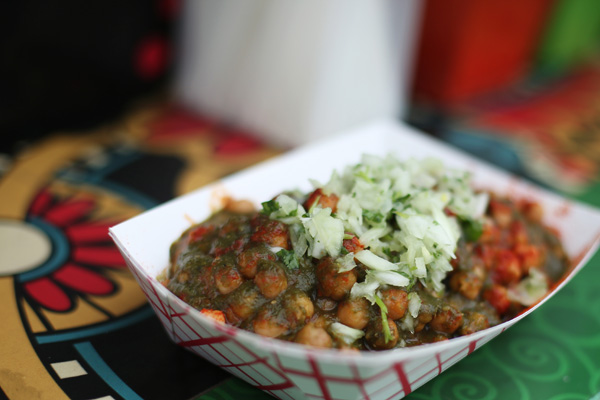
The samosa chole - pictured here - is the biggest seller at Bombay Food Junkies.

The samosa chole – pictured here – is the biggest seller at Bombay Food Junkies.

Panchal started scouring Craigslist for vehicles that could be converted into food trucks and called local food truck operators for tips and hints. After finding a truck, the couple launched a Kickstarter campaign and raised the necessary funds to get the truck wrapped in banners and fully modified. Less than two years after opening, Bombay Food Junkies took second place in a Best Vegetarian Food Truck competition sponsored by mobile-cuisine.com.

“The key to our success is finding what foods sell and where,” explains Panchal. “Our samosa chole is the biggest seller, while veggie burgers were a surprise flop. Picking the right location is important too; not all scenes are looking for a vegetarian option.”

The Panchals park their Bombay Food Junkies food truck for lunch, dinner and special occasions at locations throughout the St. Louis metropolitan area, including the corporate headquarters of Wells Fargo Advisors.

The Panchals park their Bombay Food Junkies food truck for lunch, dinner and special occasions at locations throughout the St. Louis metropolitan area, including the corporate headquarters of Wells Fargo Advisors.

Krupa runs the day-to-day operations of the truck, while Sid, a senior consultant for project management at Daugherty Business Solutions in St. Louis, helps out at the truck some weeknights and on weekends.

“My wife was used to driving a Honda Civic, and suddenly she had to learn to drive a 28-foot truck filled with two refrigerators, a three-compartment sink and two pizza ovens,” says Sid. “But we haven’t had any accidents yet and are still going strong. The business is now over two years old.”

Story by Peter Ehrhard

Photos by Sam O’Keefe

Adapted from the Spring 2015 issue of Missouri S&T Magazine.